
TLDR - Real estate equity is now a composable primitive on chain. Deposit GromaCoin (real estate-backed collateral), borrow USDC.
The market enables holders of GromaCoin (GRO), a tokenized share in the Groma Real Estate Trust, a multifamily apartment REIT with over $150 million in ecosystem value, to borrow stablecoins against their tokens through institutional-grade infrastructure. Lenders deposit USDC into a Birch Hill vault built leveraging Yearn and Morpho’s infrastructure, earning yield from borrowers posting real estate-backed collateral.
This is the first time tokenized REIT equity has been used as collateral in a programmatic, whitelisted onchain lending market with institutional risk management and onchain controls. It represents what we believe is the natural next step for real world assets: moving from static tokenization to composable, productive capital.

Source: Groma
Why Now? Tokenized real world assets have crossed $16 billion in onchain value globally (DeFiLlama), but most tokenized real estate today sits idle, held in static digital wallets. There is not enough diversity to put assets to work at scale for institutional holders.
Birch Hill’s partnership with Groma changes the equation. By combining Groma’s vertically integrated real estate platform and Birch Hill’s risk management and compliance layers, we are creating the first real estate equity lending market that couples verifiable onchain custody and offchain yield generation. The implications extend beyond a single vault. When tokenized REIT equity can serve as reliable lending collateral, thanks to transparent NAV reporting, programmatic risk parameters, and institutional liquidity infrastructure, it sets the stage to expand tokenized equity lending markets for structured real estate broadly.
What is Groma? Groma is a vertically integrated real estate company that owns and operates multifamily apartment properties, primarily small to mid-sized buildings in dense urban cores. The company has built proprietary technology, including an AI property manager called “Grobot”, to efficiently acquire, renovate, and manage Groma assets, opening up a historically overlooked $2T+ asset class to institutional investors.
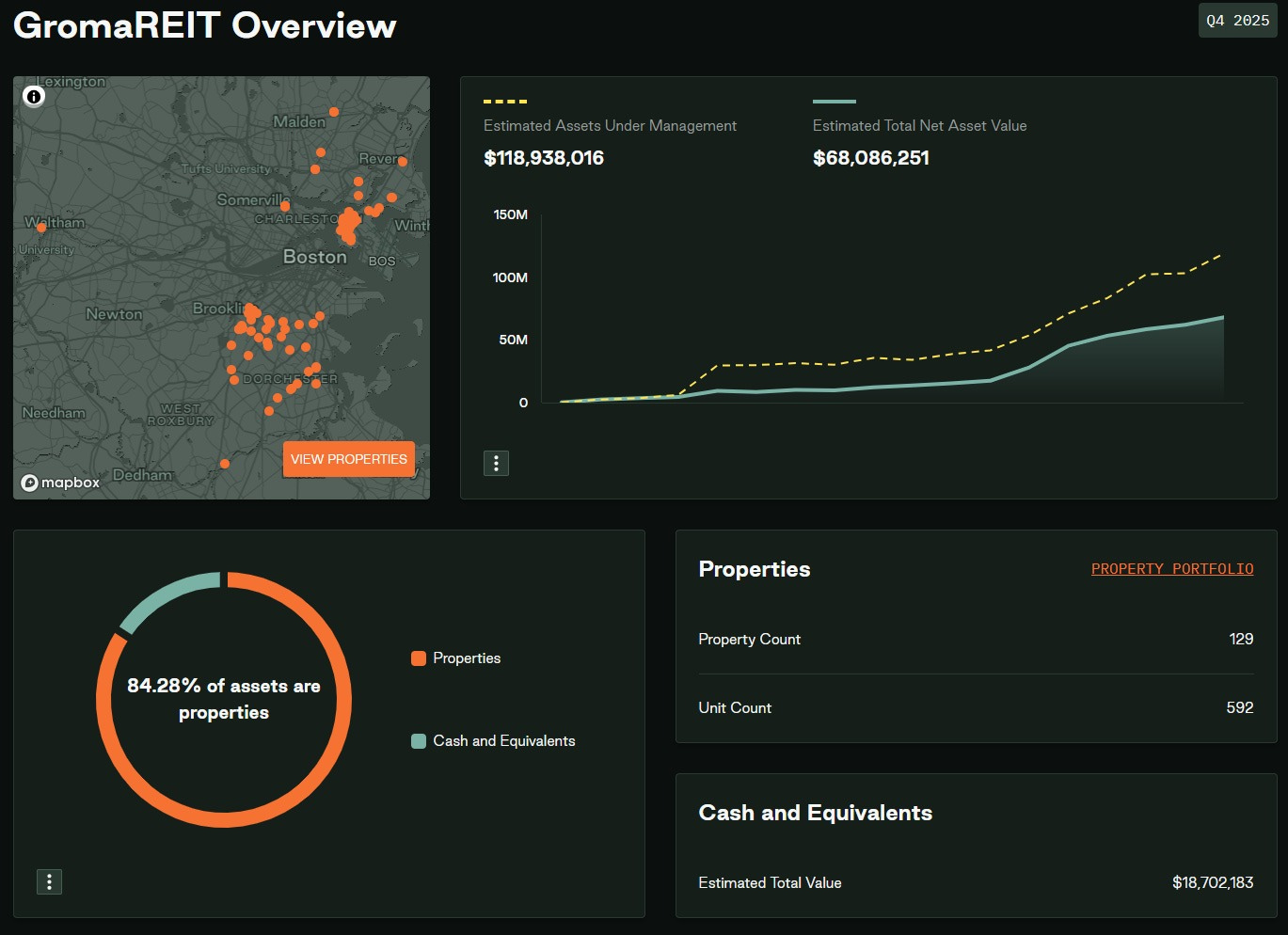
GromaCoin is a tokenized share in the Groma Real Estate Trust, a Maryland corporation structured as a NAV REIT. As of Q4 2025, the trust reported a net asset value of $1.05 per token with an aggregate NAV of approximately $68 million across nearly 65 million tokens outstanding. The trust targets a total 8-12% yield profile, composed of 4–5% annual dividends and 4–7% appreciation. What makes Groma distinct in the tokenized asset landscape is asset-level ownership: Groma actually owns the real estate. The tokens are not synthetic exposure or wrapped ETF shares; they represent equity in a portfolio of physical apartment buildings with real tenants, real cash flows, and real operating history.
Source: Groma
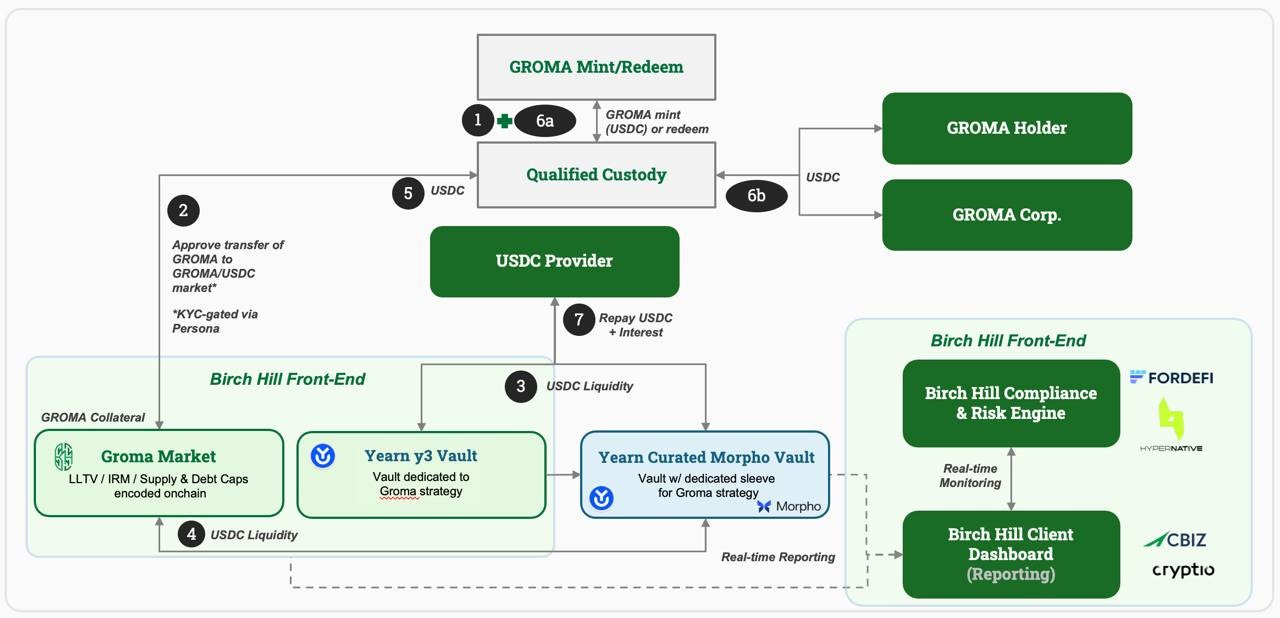
How the Vault Works - The architecture utilizes four protocols and platforms, each responsible for a distinct function in the capital stack. Morpho provides the base lending protocol, a set of immutable smart contracts that define how collateral is posted, how loans are issued, and how liquidations are triggered. Morpho’s isolated market design means the Birch Hill X GRO lending market operates independently from other Morpho markets, with its own risk parameters and access controls.
Yearn Finance curates the USDC vault that supplies liquidity to the Groma market. Yearn’s role is capital allocation: directing depositor USDC into the Morpho market based on risk-adjusted yield, managing rebalancing, and providing the vault frontend. Yearn’s involvement signals that this market meets the risk and return standards of one of DeFi’s most established yield protocols.
Source: Birch Hill
Institutional Access Layer - Birch Hill provides the risk management, compliance, and institutional access layer. Birch Hill’s risk engine applies a collateral scoring framework, adapted from traditional real estate credit underwriting, to both establish proper risk metrics for the Groma market and create proper institutional liquidation infrastructure. Additionally, Birch Hill provides clients with institutional-grade analytics to meet both accounting and financial reporting requirements.
Groma provides the collateral asset itself, GromaCoin (GRO), along with the underlying real estate assets, operational management, data,, NAV reporting, and distribution infrastructure. Groma’s quarterly NAV process, including independent review quarterly by Cushman & Wakefield, provides the fundamental valuation anchor for the oracle price feed.
Open Liquidity, Permissioned Collateral - This market is deliberately asymmetric in its access model. The supply side, depositing USDC to earn yield, is open. Any stablecoin holder can provide liquidity to the vault without KYC, the same way any lender can participate in an existing peer-to-pool onchain market. This open supply side is critical: it allows the market to attract deep stablecoin liquidity from across the ecosystem, driving borrowing rates down over time as supply scales.
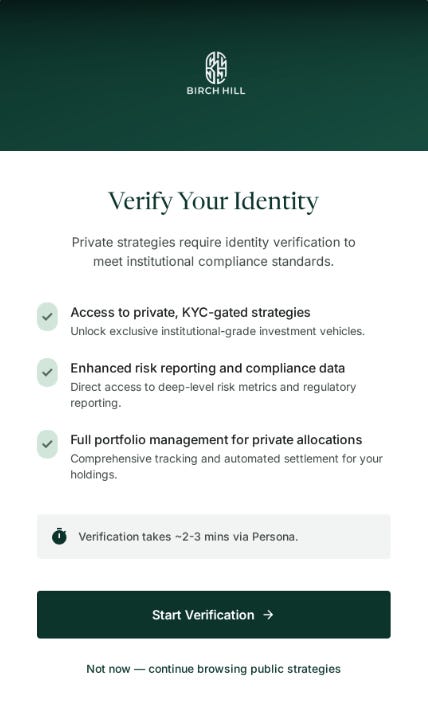
The collateral side is permissioned. Borrowers must hold GromaCoin acquired through compliant offerings (currently available to accredited and non-accredited investors in the US and elsewhere)) and are verified through Persona KYC before being allow-listed to post collateral. This ensures that every borrower in the market is a known, compliant holder of a regulated security.
This hybrid architecture–open liquidity, permissioned collateral–is the design that makes institutional real estate lending composable onchain. It preserves the capital efficiency and rate discovery of DeFi lending while enforcing the compliance controls that the underlying asset requires. Institutional capital gets regulatory clarity on the borrower side; stablecoin holders get transparent, real estate-backed yield on the supply side.
Source: Birch Hill
Phased Rollout - The partnership is rolling out in three phases. In Phase 1, launching in Q2 2026, Birch Hill deploys the initial Morpho market on Base with GromaCoin collateral and USDC lending. Yearn curates the USDC vault and manages allocation. GromaCorp engages as the first borrower, and Birch Hill sets the initial risk parameters, including interest rate model and loan-to-value limits.
Institutional Liquidity & Risk Infrastructure - One of the most critical questions in any real estate-collateralized lending market is: what happens if the borrower defaults? For tokenized real estate, this question is harder than it is for liquid crypto assets because there is no deep order book to sell into.
Birch Hill has assembled a multi-layered liquidation infrastructure to address this. Near-term, institutional partners such as institutional market makers provide dedicated liquidation capacity for the pilot. These are not automated bots; they are institutional counterparties with the balance sheet and mandate to absorb GromaCoin collateral at a discount and hold or redeem through Groma’s quarterly NAV process.
Longer term, Birch Hill is evaluating protocol-level RWA liquidation solutions to scale liquidation infrastructure as the market grows. The goal is a layered system: institutional liquidators for large positions and programmatic solutions for routine operations. Groma’s own redemption infrastructure provides a fundamental floor. The trust honors quarterly redemptions at NAV with a 10% quarterly capacity, and historical redemption rates have been under 1%, –a positive signal for collateral stability. While real estate values fluctuate, they have intrinsic underlying value, allowing for a deeper pool of buyers at a smaller discount than may be the case for non-asset-backed tokens.
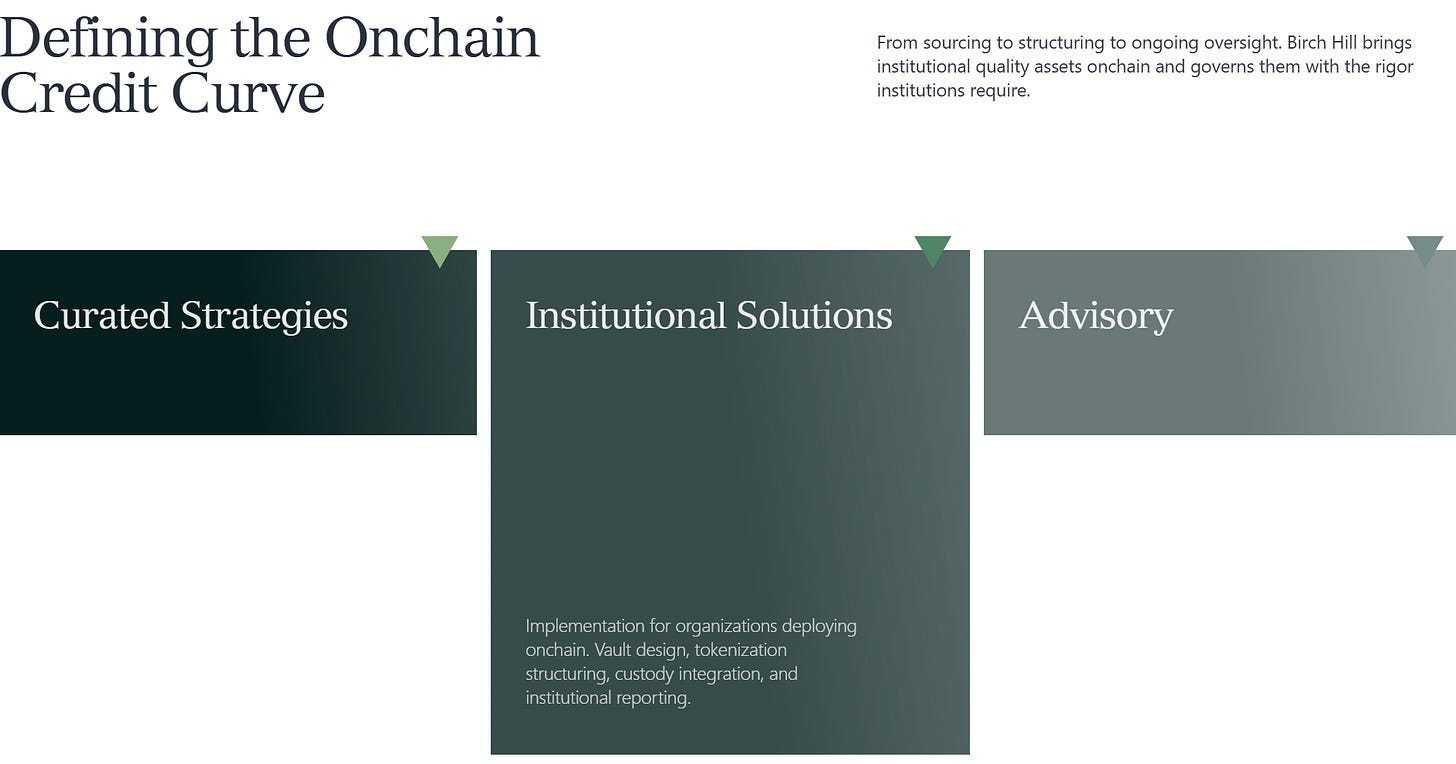
The Birch Hill Platform - Groma is the first deployment in what Birch Hill is building as a broader tokenized credit platform. The thesis is straightforward: real world assets need real world credit infrastructure, and the onchain capital markets stack–lending protocols, vault curation, risk engines, and compliance tooling–is now mature enough to deliver institutional quality.
Proving out that onchain infrastructure today can support a REIT as lending collateral with transparent risk management and institutional liquidation will allow us to expand the asset universe tomorrow. Birch Hill is the infrastructure and risk management layer in this stack, and our work with Groma is that proof of concept.
Source: Birch Hill
Looking Ahead - This partnership is in active build and integration. The technical workstreams, oracle integration for onchain NAV reporting, dividend distribution mechanics for tokens posted as collateral, and smart contract deployment are being finalized by engineering teams at Birch Hill and Groma.
We expect to share more detail on market parameters and vault details as the deployment progresses. For Birch Hill, this is the beginning of a new asset class in onchain credit. For Groma, it is the next step in making real estate composable.
We believe the best version of onchain finance is not a replacement for traditional capital markets, but a better implementation of them. Transparent risk parameters. Programmable compliance. Real assets. This is a first public implementation of what that looks like in practice.